
Knowing how to touch up faded wood furniture starts with a simple rule: add color gradually. A marker that looks perfect on its cap can appear much darker on bare wood, an old clear coat, or a previously repaired area. Careful preparation and small test strokes help the repair blend with the surrounding finish instead of becoming a new dark patch.
Decide whether the problem is only color loss
Look at the area in daylight. Fading and light surface wear may be suitable for a cosmetic touch-up. Stop if the wood is soft, swollen, moldy, actively flaking, structurally loose, or damaged by an ongoing leak. Those conditions need their cause corrected before any color work.
Identify the surface before applying color
Solid wood, veneer, laminate, paint, wax, and clear-coated finishes react differently. A touch-up product intended for wood color loss may not bond properly to plastic laminate or a heavily waxed surface. Check the furniture maker's care information when it is available.
Clean gently and let the area dry
Remove dust with a soft cloth. If further cleaning is appropriate for the finish, use the mild method recommended by the furniture maker. Avoid soaking seams or veneer edges. Oils, polish, and cleaner residue can cause uneven color, so allow the area to dry fully.
Start with a lighter shade
Choose the closest light tone in the surrounding grain rather than the darkest streak. Test it underneath, behind a leg, or on another hidden finished area. Let the test dry because wet color may look different. It is easier to deepen a light result than to remove an overly dark mark.
Build color in thin passes
Use short strokes that follow the grain. Wipe excess promptly if the product directions permit it, then allow the layer to settle before deciding whether another pass is needed. Do not repeatedly scrub the same wet area; that can create a hard-edged patch.
Use more than one tone for natural grain
Wood rarely has one flat color. After establishing a light base, add a few narrow strokes with a slightly darker compatible shade to echo nearby grain lines. Keep the pattern irregular and compare it from normal viewing distance.
Reserve filler for actual low spots
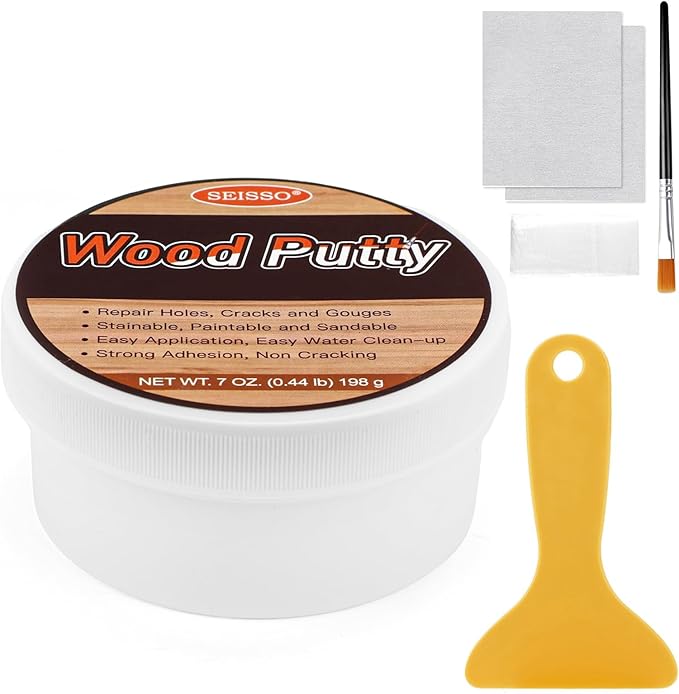
Faded color alone does not require filler. If a shallow chip or depression is present, use only a filler that is compatible with the surface and follow its preparation and curing directions. Leveling, coloring, and sealing may be separate steps.
Review the product instructions
The SEISSO 18-color furniture touch-up marker set offers multiple tones for gradual matching. Confirm current application, drying, storage, ventilation, and surface-compatibility directions on the product page and packaging before use.
Match sheen as well as color
A color match can still stand out if the repair is glossier or duller than the surrounding finish. Do not add a topcoat automatically. First confirm that it is compatible with both the original finish and the touch-up material, then test it in a hidden location.
Know when a professional repair is safer
Valuable antiques, large sun-faded panels, lifting veneer, water damage, and unknown finishes can be difficult to blend locally. A furniture conservator or experienced refinisher can assess whether a localized repair or a broader refinishing plan is appropriate.
Frequently asked questions
Why does my touch-up look too dark?
The shade may be too deep, the surface may be porous, or too much product may have been applied at once. Test lighter colors and build slowly.
Can I color the entire tabletop with a marker?
Touch-up markers are generally better suited to localized wear. Large faded areas need an appropriate refinishing method.
Should I sand first?
Not automatically. Sanding can remove an intact finish or cut through thin veneer. Follow the repair product and furniture guidance.
Make the repair disappear gradually
Clean first, test out of sight, begin light, follow the grain, and pause between layers. A restrained repair usually blends better than trying to reach the final color in one pass.