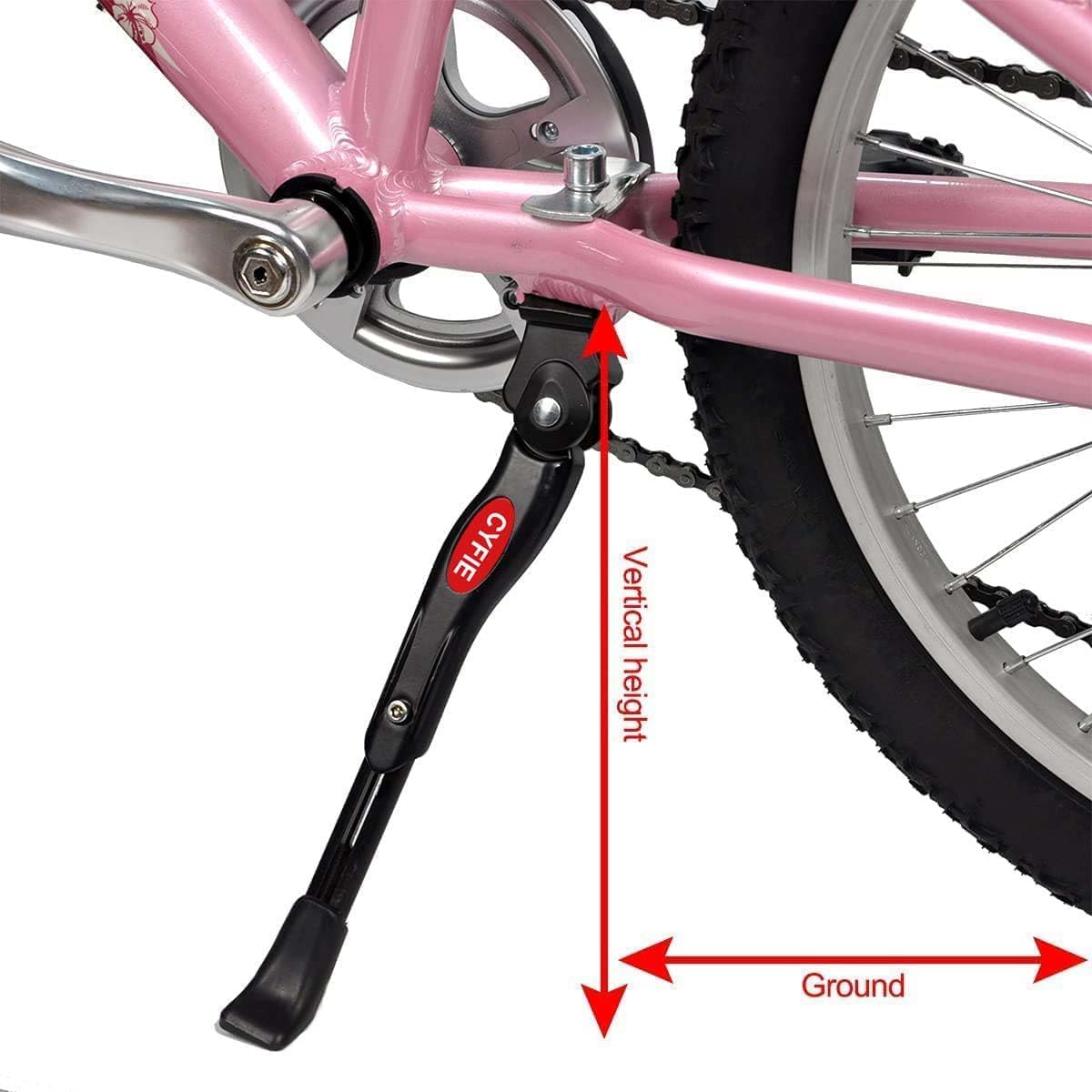

A bike that tips when parked can point to the ground, the stand setting, or a bag that has shifted the balance. Check each while holding the bike upright.
Start with a flat, firm surface
Choose a dry spot where both tires and the kickstand foot can rest on the same flat surface. Hold the bike by the handlebar and frame while you lower the stand, then guide the bike toward it. If the stand foot is at the edge of a paving joint or one tire is on a ridge, reposition the bike before judging how it rests.
Keep the bicycle within reach while you observe it. Use gentle support and pause if it starts to roll or tip. A child can watch from a clear spot while an adult handles the bike.
Look at the three points touching the ground
The parked bike rests on the two tires and the end of the stand. Look at each point from the side. A stand foot that barely reaches the ground, lands on an edge, or shifts when the bike settles deserves a closer look. Check whether the foot is worn, whether the stand reaches its deployed position, and whether either tire is sitting in a rut.
Move the bike a short distance to a second flat spot and repeat the check. If its behavior changes, compare those two surfaces before adjusting anything. A small paving seam or patch of loose grit can explain a difference that is hard to see from handlebar height.
Observe the lean before changing the length
Guide the bicycle onto the deployed stand and watch how far it leans while you still have a hand on it. An almost upright bike may be easier to tip toward the opposite side if the bars turn or the ground changes. A pronounced lean can put the bike in a position that is difficult to set down or pick up. Use the stand and bike instructions to judge the intended position.
If the instructions allow you to adjust the length, support the bike first, then use the stated method and setting limits. Recheck the deployed position after each change. Keep track of the original setting so you can describe what moved if you need help. If the leg shifts under the bike or its adjustment fails to stay secured, have the stand checked before parking on it.
Verify fit at the frame and near moving parts
The CYFIE listing on SEISSO describes an adjustable kickstand for bikes with 16, 18, or 20 inch wheels. Read the size on the tire sidewall and confirm the bike’s mounting location and frame clearance with the product instructions. Bring the model name and a clear photo of the mounting area when asking the seller about fit. Wheel size is one part of that check.
With the bike supported, look for looseness, a bent part, or rubbing around the stand’s mount and hinge. Confirm clearance with the stand folded and deployed using the manufacturer’s procedure. Keep hands clear of the hinge and moving drivetrain. If the stand touches a crank, tire, chain, or other moving part, have the fit checked before riding.
Repeat with the items the bike usually carries
Try the parking position with an empty basket or rack first. Then check again with the normal load within the bicycle and accessory limits. A bag shifted to one side or a heavy item in a front basket can change which way a bike wants to fall. Have an adult steady the bike while adding or removing items, especially when the handlebar can turn under the load.
If the unloaded bike parks securely and the loaded one feels unsteady, take the bag off and look for a better parking position. Check how the bike behaves when the child lifts out a water bottle or opens a basket. A supervised practice run with everyday items can reveal an awkward movement before it happens on a crowded pavement.
Choose a parking spot the stand can use
At a bike rack or outside a building, look for firm ground with room for the bicycle’s lean. Place the foot well inside a paving slab and leave space for people to walk around it. On soft ground, the stand can sink after the bike first appears settled. If the surface gives way or the bike can roll, move to a suitable spot or use an appropriate rack.
Show the child where to stand while parking. Practice keeping one hand on the bicycle until it settles and checking where the stand foot has landed. An adult should support the bike when it needs repositioning. A nearby wall or fence may look convenient, but consider door swings, foot traffic, and whether another person will need to move past the bicycle.
Check again after the bike changes
A new tire, a replacement wheel, a changed accessory, or a fall can affect how the bike rests. Use the same level spot to compare the lean and the stand’s contact. Look at the hinge, foot, and mounting hardware following the bike and stand instructions. Keep a note of changes that happened shortly before a new parking problem, even when the stand still looks straight.
If you find damage or hardware that will not stay secured, bring the bike and product details to the seller or a bicycle mechanic. Model information and a photograph of the stand deployed can help with diagnosis. Use the mounting instructions for the exact product when replacing a part, and confirm its clearance and parking position before putting the bike back into use.
Turn the check into a short parking routine
Use a simple sequence when arriving somewhere. Pick firm ground, guide the bike onto the stand, and look at the foot before releasing the handlebar. Check that a bag or basket stays in place and that the parked bike leaves a clear path. Before riding away, fold the stand and check that it stays in its riding position as directed.
For a replacement, review the current CYFIE product listing alongside the bicycle’s mounting instructions. Confirm the marked wheel size, attachment location, and available adjustment. Keep the instructions where an adult can find them when the child moves to another bike.
Frequently Asked Questions
Why does my child’s bike tip even though the kickstand reaches the ground?
Check the stand foot, bike lean, surface, and anything attached to the bike. Start on flat ground with the bike unloaded, then change one condition at a time.
Will a stand listed for 20 inch wheels fit every 20 inch bike?
Confirm the frame mounting point, hardware, and clearance as well as the wheel size. Ask about the exact bicycle model when any fit detail is unclear.
Should I adjust the kickstand for a sloping driveway?
Use the instructed setting and start with a suitable level spot. Move the bike to a rack or firmer, flatter ground if it can roll or tip.
When should I recheck the stand?
Repeat the parking and clearance checks after a fall, a tire or wheel change, a new accessory, or any movement in the mounting hardware.
Product details: Cyfie Adjustable Bike Kickstand for 16"/18"/20" Kids Bikes Aluminum Alloy