
Spackle vs. joint compound for small repairs is a practical choice based on the size and type of damage, the wall material, drying time, and the finish you need. The terms are sometimes used loosely, so always follow the label on the exact product rather than assuming every paste works the same way.
What is spackle used for?
Ready-mixed spackle is commonly intended for small cosmetic repairs such as nail holes, shallow dents, and minor surface imperfections in suitable interior walls. It is often convenient for spot repairs because it comes prepared for application and may dry faster than general joint compound.
What is joint compound used for?
Joint compound is commonly used with drywall tape to finish panel seams, fasteners, and broader drywall work. It is usually applied in multiple thin coats and feathered over a wider area. Different setting-type and drying-type compounds behave differently.
Choose by repair size, not only by product name
A small clean nail hole may suit a labeled spackle product. A taped seam, large damaged section, deep void, moving crack, or exposed drywall structure may require joint compound, backing, patches, or professional repair. Do not bridge a large unsupported opening with surface paste alone.
Check the wall material
Drywall, plaster, masonry, wood, and painted surfaces have different adhesion and movement characteristics. Confirm that the product label lists the actual substrate. Crumbling plaster, moisture damage, or loose wall material should be stabilized before cosmetic filling.
Consider depth and number of coats
One thick application can shrink, crack, remain soft inside, or create a raised patch. Follow the maximum depth and drying directions. Deeper repairs may need backing or several thin layers, with each required layer allowed to dry before the next.
Think about sanding and finish
Both products can leave visible edges if overfilled. Apply only what is needed, feather the perimeter, and sand lightly after full drying when the instructions allow it. Wear suitable dust protection and avoid aggressive sanding that damages surrounding drywall paper.
Prime before painting when required
Unprimed repair material can absorb paint differently and leave a dull or flashing spot. After the repair is dry, smooth, and dust-free, use a compatible primer when recommended before applying the finish paint.
Match the product to a small repair
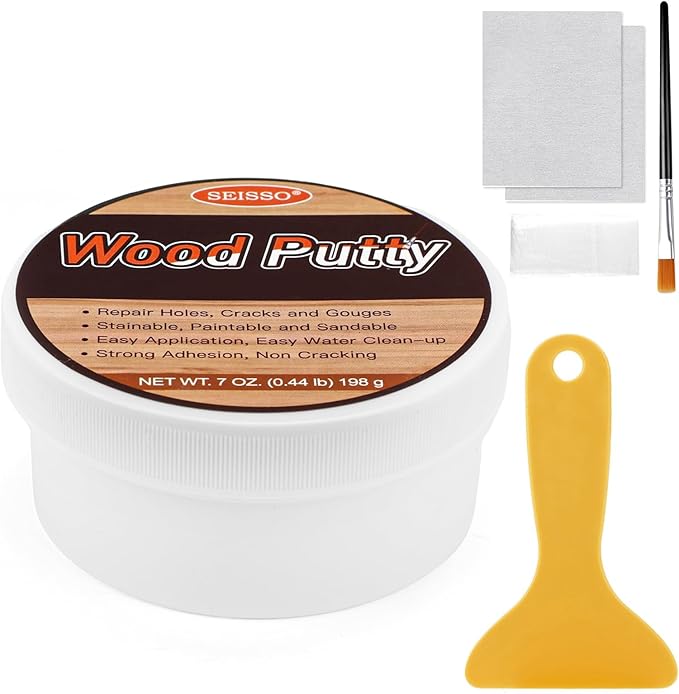
For minor drywall holes and cracks, review the current instructions for the SEISSO 2×100g drywall repair kit. Product limits, supported surfaces, drying, sanding, and painting directions take priority over general advice.
Do not cover an active problem
Recurring cracks, stains, softness, mold, bulging, or dampness may point to movement or a leak. Find and correct the cause before patching. Large structural damage, electrical hazards, or uncertain materials should be assessed by a qualified professional.
Frequently asked questions
Can spackle replace joint compound on seams?
Do not assume so. Taped drywall seams generally need a compound and system intended for that work.
Which one dries faster?
Many small-repair spackles dry quickly, but time depends on formula, thickness, temperature, and humidity. Use the label.
Can I paint as soon as the surface feels dry?
Not necessarily. Follow the full drying and priming instructions for the product and repair depth.
Use the smallest suitable repair system
For a shallow cosmetic defect, labeled spackle may be the simpler option. For seams, broad areas, deep damage, or structural repair, use the appropriate joint-compound or patching system.