
Paintable wood putty can make a small dent, chip, or old hardware mark less visible before furniture is refinished. The repair succeeds when the substrate is stable, the filler is applied within its limits, and the primer and paint are compatible with both the patch and the original surface.
Decide whether the defect is cosmetic
Use filler only for damage within the product limits. Moving joints, broken load-bearing parts, wet or swollen wood, lifting veneer, rot, and valuable antiques need a different assessment.
Identify the substrate and coating
Confirm whether the piece is solid wood, veneer, MDF, particleboard, laminate, paint, lacquer, oil, or another finish. A material described as stainable may not accept stain exactly like surrounding wood.
Remove hardware and loose material carefully
Take off knobs or fittings only when it is safe and useful. Remove detached debris without enlarging the defect, and protect intact edges.
Clean and dry the repair area
Remove dust, grease, wax, and residue using a method compatible with the existing finish. Let the surface dry completely.
Test adhesion and finish compatibility
Use a hidden area or matching scrap to test filler, sanding, primer, and paint. Record how the dried patch changes color and texture.
Apply thin controlled layers
Press a small amount into the defect, avoiding a wide smear. Deeper repairs may require multiple applications and the stated drying time between them.
Review the exact filler
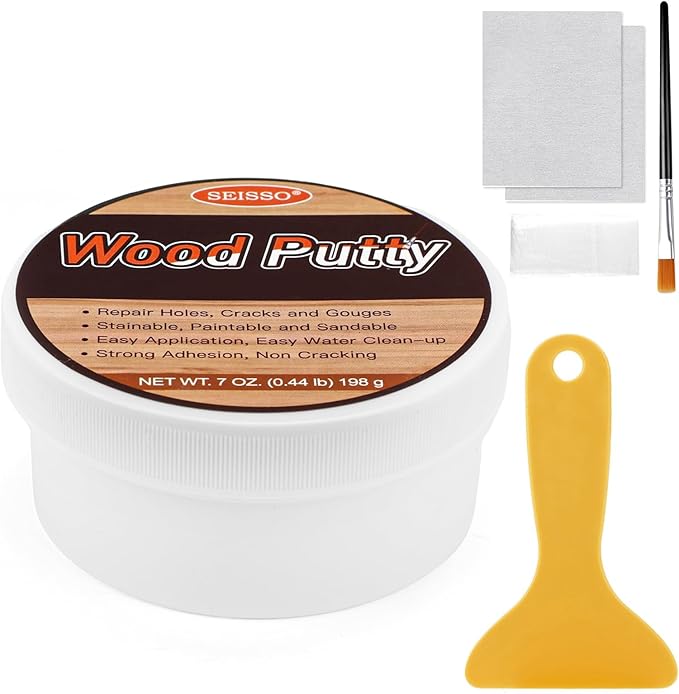
Check current surface limits, application, drying, sanding, painting, staining, ventilation, and storage directions for SEISSO paintable and stainable wood putty.
Sand only after full drying
Level the patch with the recommended abrasive and dust protection. Feather lightly without cutting through nearby veneer or changing the furniture profile.
Prime when the coating system requires it
A porous patch can absorb paint differently. Use a compatible primer where directed and allow it to dry before applying thin paint coats.
Inspect color, texture, and sheen
Check the cured repair in daylight and room light. The patch may remain visible if the paint color, surface texture, or gloss differs from the surrounding finish.
Frequently asked questions
Can general advice replace the product directions?
No. The current label, manual, and qualified professional advice take priority.
When should I stop?
Stop if you notice damage, instability, irritation, overheating, or another unexpected change.
Use a controlled routine
Prepare carefully, follow the exact directions, work in small steps, and inspect the result before regular use.